Why Short-Form Video is Quietly Dominating Legal Marketing
Platforms like YouTube and TikTok have changed how people consume information.
Nobody’s reading a 2,000-word legal breakdown after a car accident.
They’re watching:
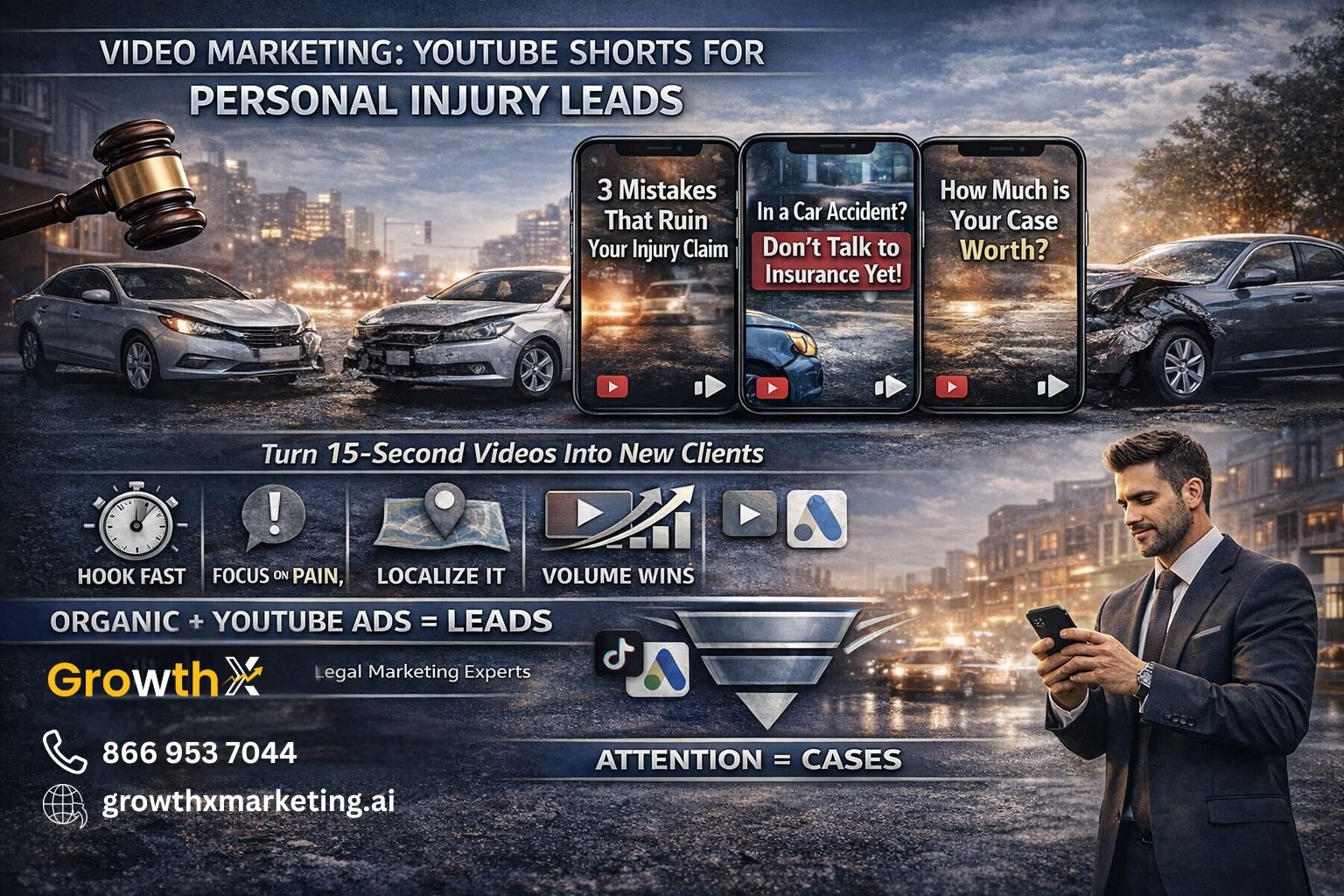
- “What to do immediately after a crash.”
- “3 mistakes that ruin your injury claim”
- “How much is your case actually worth?”
This is where video marketing for legal services stops being optional… and starts being your unfair advantage.
The Power of YouTube Shorts for Personal Injury Leads
Shorts aren’t just content, they’re discovery engines.
The algorithm pushes your video to people who didn’t even search for you yet. That’s massive.
With the right short-form video strategy, you can:
- Build trust before the first call
- Educate while positioning authority
- Stay top-of-mind during decision-making
And here’s the kicker:
A 20-second video can outperform a $2,000 ad campaign if it hits the right nerve.
What Actually Works
Let’s cut through the fluff.
1. Hook Fast or Get Ignored
First 3 seconds = everything.
Bad:
“Hi, I’m John, a personal injury attorney…”
Better:
“Just got into an accident? Don’t talk to insurance yet.”
Pattern interrupt wins. Every time.
2. Focus on Pain, Not Law
People don’t care about legal jargon.
They care about what happens to them.
Winning topics:
- “Why do insurance companies delay your claim?”
- “What to do if the other driver lies?”
- “How much your case could actually be worth.”
This is visual storytelling for attorneys—simple, direct, human.
3. Localize Without Being Obvious
Instead of saying:
“New York personal injury lawyer…”
Say:
“If you’re dealing with an accident here in Brooklyn…”
Subtle. Natural. Effective.
This ties directly into your broader local SEO play.
4. Volume Beats Perfection
One video won’t change your pipeline.
But 50 will.
Consistency builds:
- Familiarity
- Trust
- Authority
And in legal, trust is currency.
YouTube Ads for Lawyers: Amplify What Works
Organic is great.
But when you combine it with YouTube ads for lawyers, things get serious.
Promote:
- Your best-performing Shorts
- Case-based storytelling videos
- FAQ-style clips
With Google Ads, you can:
- Target by location (critical for injury law)
- Retarget video viewers
- Capture high-intent audiences
This is where attention turns into actual leads.
TikTok for Law Firms: Still Underrated
Most lawyers are still hesitant about TikTok.
Which means… opportunity.
Right now:
- Lower competition
- Higher organic reach
- Faster audience growth
But it won’t stay that way forever.
The early movers always win in new channels.
The Real Play: Build a Video Funnel
Here’s where most firms drop the ball:
They create videos… but no system behind them.
A proper video marketing legal funnel looks like:
- Short-form videos (attention)
- Landing page (conversion)
- Automated follow-up (closing)
Without steps 2 and 3, you’re just entertaining, not converting.
How GrowthX Approaches This
At GrowthX, we don’t treat video as “content.”
We treat it as pipeline infrastructure.
That means:
- Strategic content mapped to client intent
- Integration with your lead intake system
- Paid + organic working together
- Data-driven scaling (not guesswork)
Because views are nice.
Leads are better.
Signed cases? That’s the game.
External Resources
If you’re serious about leveling up your video strategy:
- YouTube Creator Studio – Track performance and optimize content
- Google Trends – Find what people are actively searching for
- CapCut – Simple editing for high-performing Shorts
Final Thought
Attention is the new real estate.
And right now, it’s not on billboards…
It’s in 15-second videos that people didn’t even plan to watch.
So the question isn’t:
“Should lawyers use video marketing?”
It’s:
How long can you afford not to?
FAQs
What are Local Service Ads for lawyers?
Local Service Ads are Google advertising placements that appear above traditional search ads and operate on a pay-per-lead model.
What does Google Screened mean for lawyers?
The Google Screened badge indicates that an attorney has completed license verification and background checks required by Google.
Why are LSA leads expensive in Washington DC?
The DC legal market is highly competitive, which increases the cost per lead as firms compete for limited ad placements.
Are LSA leads better than traditional PPC leads?
They often involve higher intent because users frequently contact the firm directly from the ad interface.
Do law firms need a strategy for Local Service Ads?
Yes. Performance factors such as response time, reviews, and intake quality influence how leads are distributed.